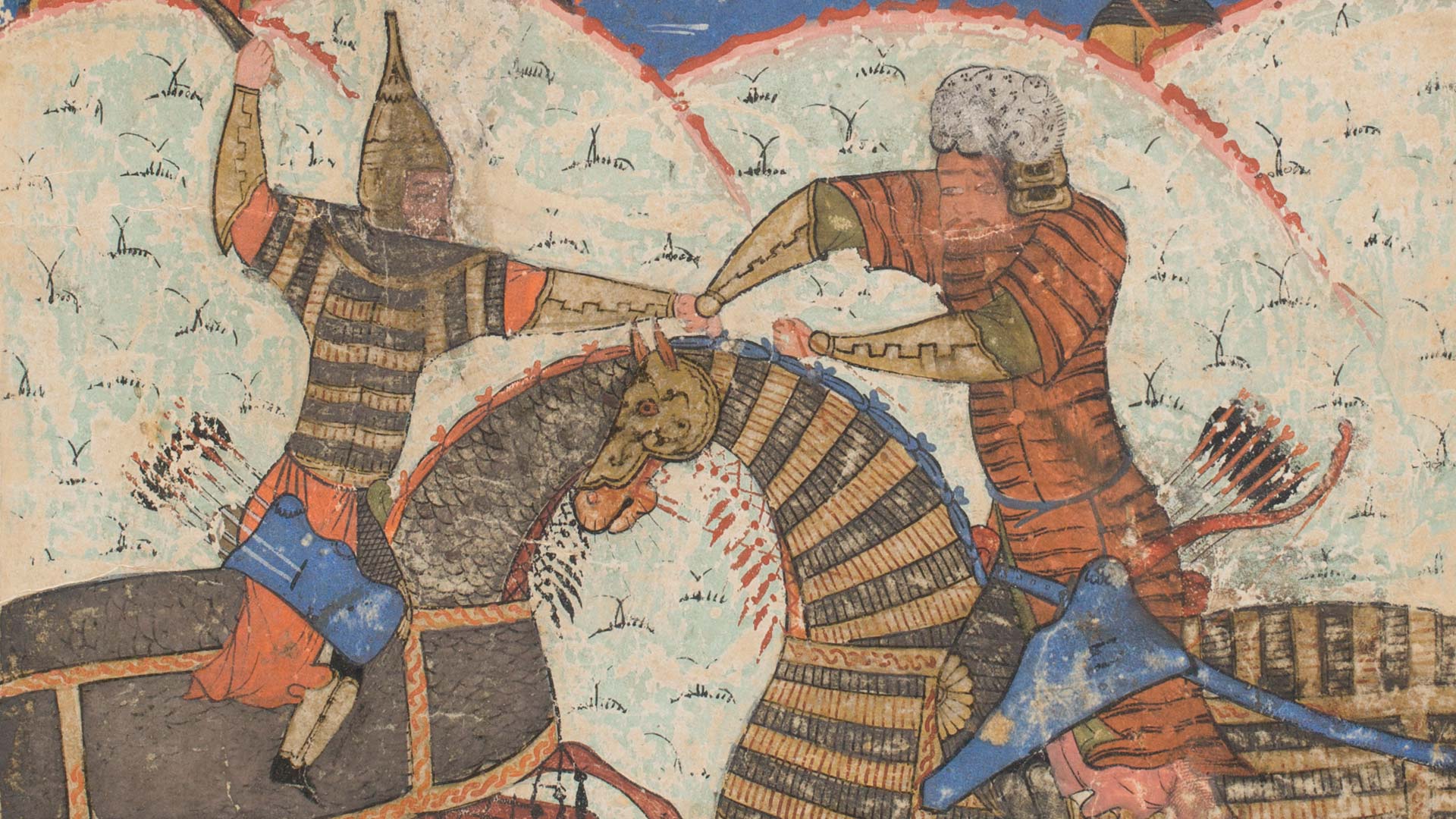
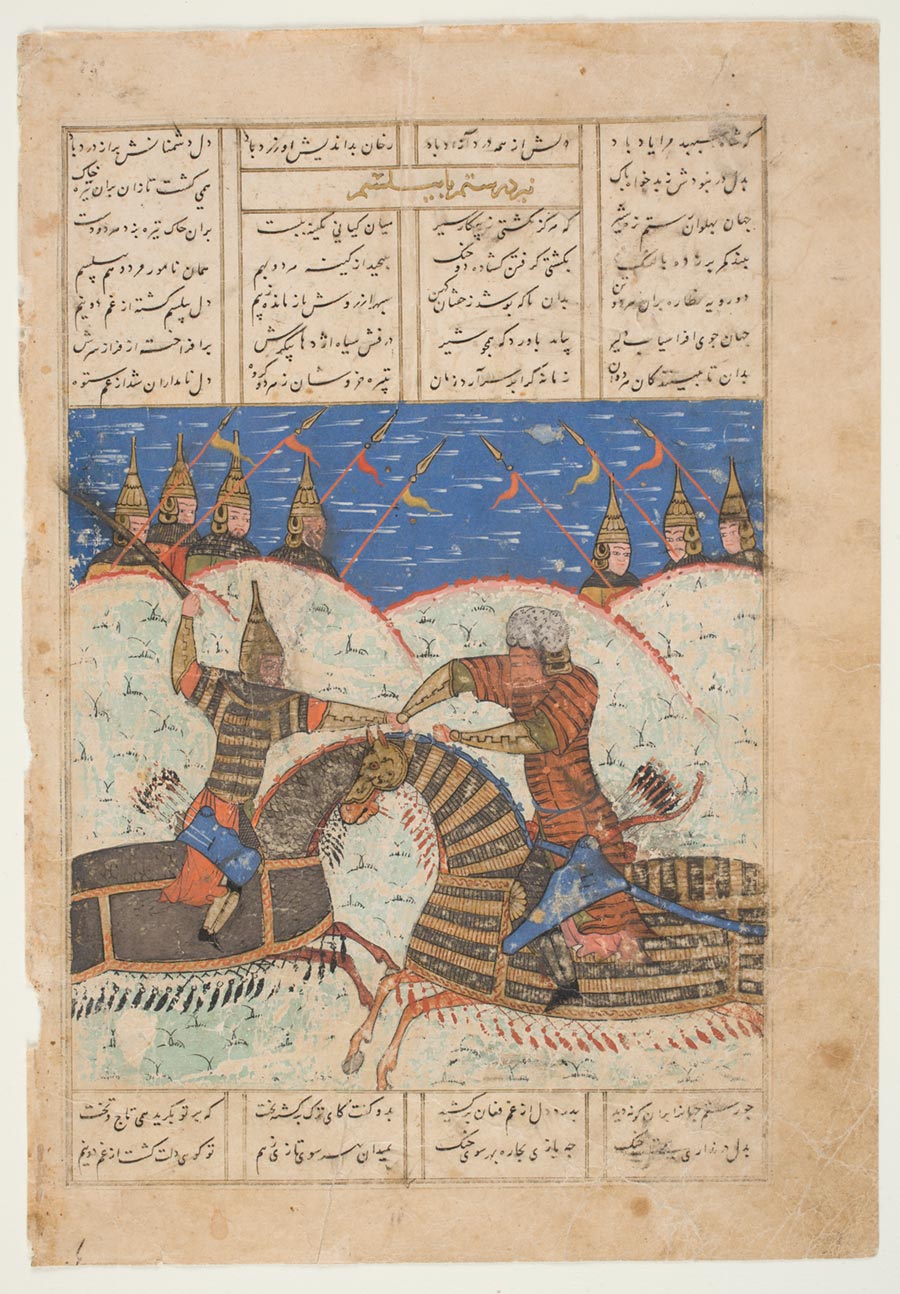
Owning a warhorse has always been a powerful marker of status. Horses gave combatants important advantages on the battlefield, and were expensive to breed, train, and feed. They were therefore often protected with equally expensive armor. In fact, the earliest surviving evidence for horse armor comes from ancient Egypt, where charioteers shielded their steeds with leather or textiles reinforced with metal or horn scales. From then on, horse armor varied widely across cultures and time periods to suit different fighting styles and celebratory traditions. For example, a watercolor miniature in the collection of the Worcester Art Museum clearly shows the horse armor of metallic scales preferred by warriors in fifteenth-century Persia (fig. 1). Japanese samurai, meanwhile, regularly fitted their horses with ceremonial armor sculpted to give them the appearance of fantastical beasts.
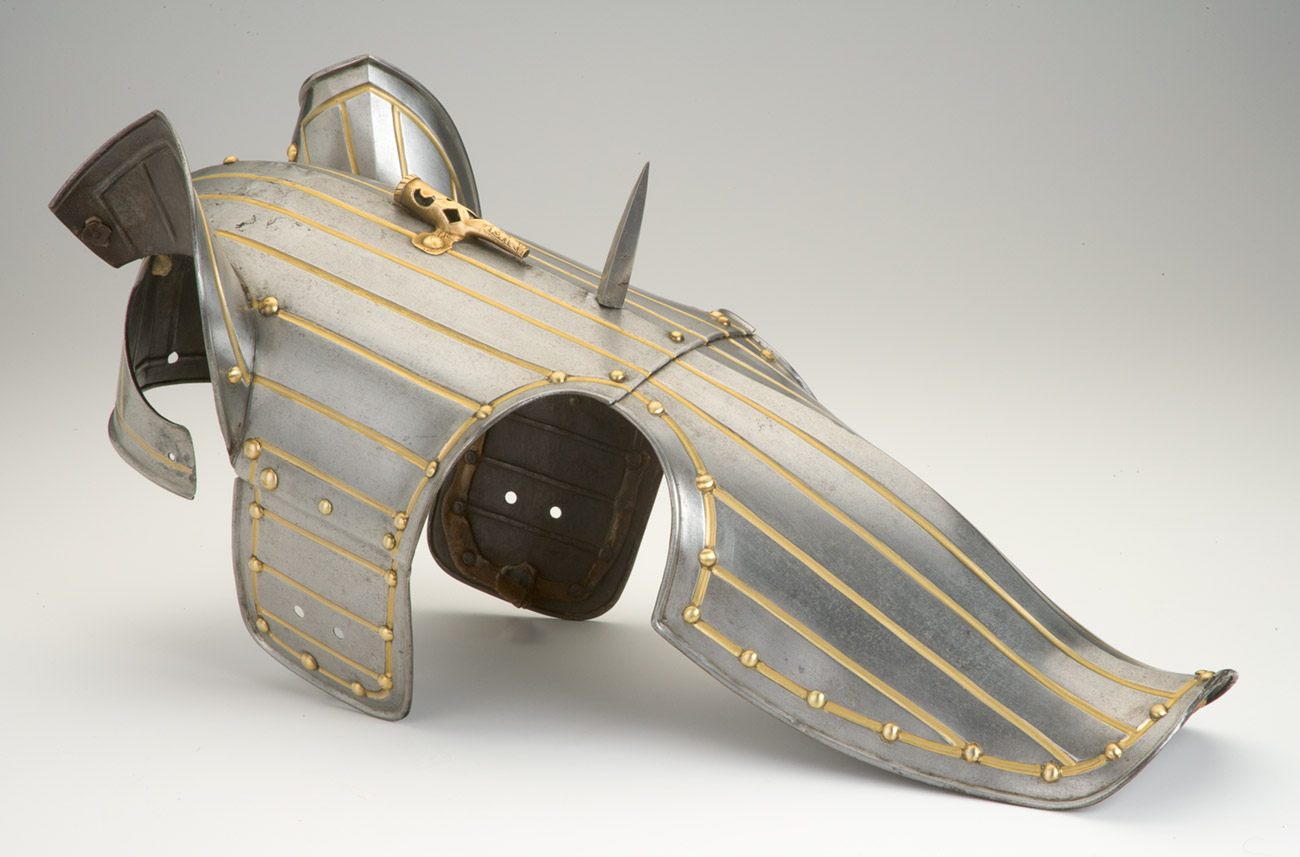
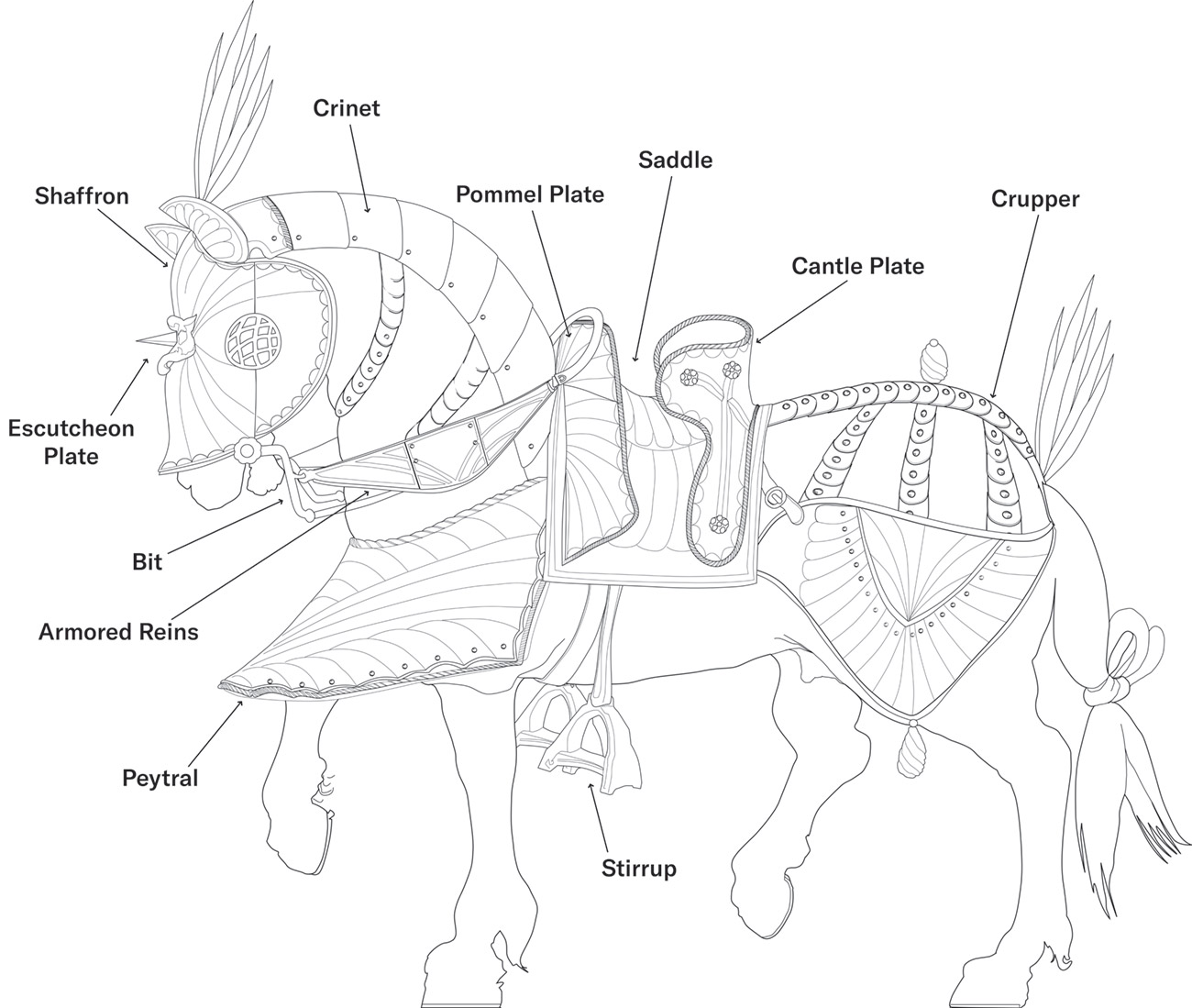
Among the more remarkable pieces of horse armor in the collection of the Worcester Art Museum is an early 1600s, German-made shaffron —a piece of armor designed to protect a horse’s head (fig. 2). This small piece of armor would originally have been part of a larger protective ensemble that covered the horse’s head, neck, chest, flanks, and hindquarters (fig. 3). The shaffron is made of seven individual pieces of metal designed to carefully balance coverage and comfort for the horse. Oval cutouts on each side allowed the horse to see and metal plates were carefully shaped and twisted to wrap around its ears. Highly functional, the shaffron is also beautifully decorated with vertical bands of gold. A golden plume holder and cylindrical spike on the front of the shaffron—cruder in workmanship and therefore perhaps later additions—further contribute to the impressive visual impact of the shaffron.
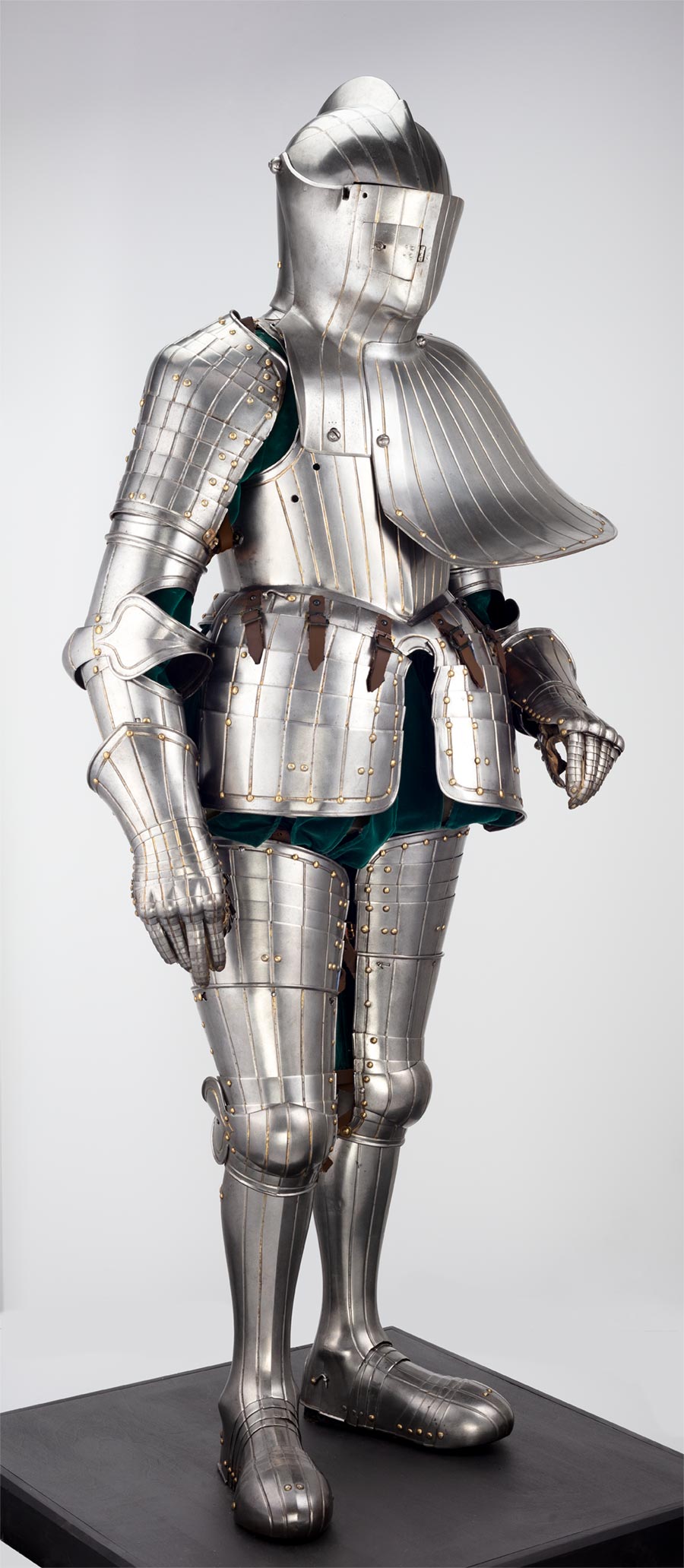
More impressive still, the Worcester Art Museum is fortunate to possess a human armor with vertical bands of gold that perfectly match those on the shaffron (fig. 4). The armor’s heavily reinforced helmet and shoulder shield—known as a “targe”—suggest it was used for jousts as skilled knights competed to unhorse each other. However, the golden bands on both the armor and shaffron remind us that jousts were also important opportunities to show off one’s wealth and prestige.
Be the first the hear about new articles and videos in the Member Monthly email newsletter. Members receive year-round free admission, tickets to events, and more.
Although the matching man and horse armor components came to Worcester separately, they are linked to a shared and prestigious history. Both objects appear in the 1619 inventory of the arms and armor belonging to the powerful German noble Johann Casimir of Saxe-Coburg. The inventory lists four matching armors “with golden stripes” made in the famous south German armor-making center of Augsburg. Three of these armors are still in European collections—the fourth is the one now in Worcester. Other historical documents indicate that the four “golden stripe” armors were likely made for a tournament organized by Johann Casimir in November 1618. The tournament was in honor of Johann Philipp von Weimar, another German noble, who had just taken control of the neighboring duchy of Saxe-Altenburg. Interestingly, a note in the 1619 inventory of Coburg castle specifically mentions that one of the four “golden stripe” armors was gifted to Johann Philipp. Given that the Worcester Art Museum’s shaffron and armor come from Altenburg castle, they must have been the ones from that generous gift.