The 1960s are often described as a tumultuous decade. Documentaries rerun television footage emphasizing polarized political voices for and against the Vietnam War, the Civil Rights movement, the triumph of the first human walking on the moon, and onset of the Women’s Liberation movement. At the same time, another revolution took place: photography emerged as a force in the American art museum. Yet, art historical surveys often leap over fine art photography in their assessments of the 1960s and ’70s, focusing their efforts instead on painting, printmaking, performance art, and film.
The first transformative shift in photography occurred at the end of the 1950s with the publication of Robert Frank’s groundbreaking book, The Americans. Ignoring standards of fine art photography dominant at the time, such as exacting composition, framing, and detail, Frank’s works, like Ranch Market, Hollywood, 1956, present an underexposed, disorienting, and blurred perspective. This approach ran counter to the styles of America’s most esteemed fine photographers, like Walker Evans, Ansel Adams, and Edward Weston, who were revered by their contemporaries for their technical precision.
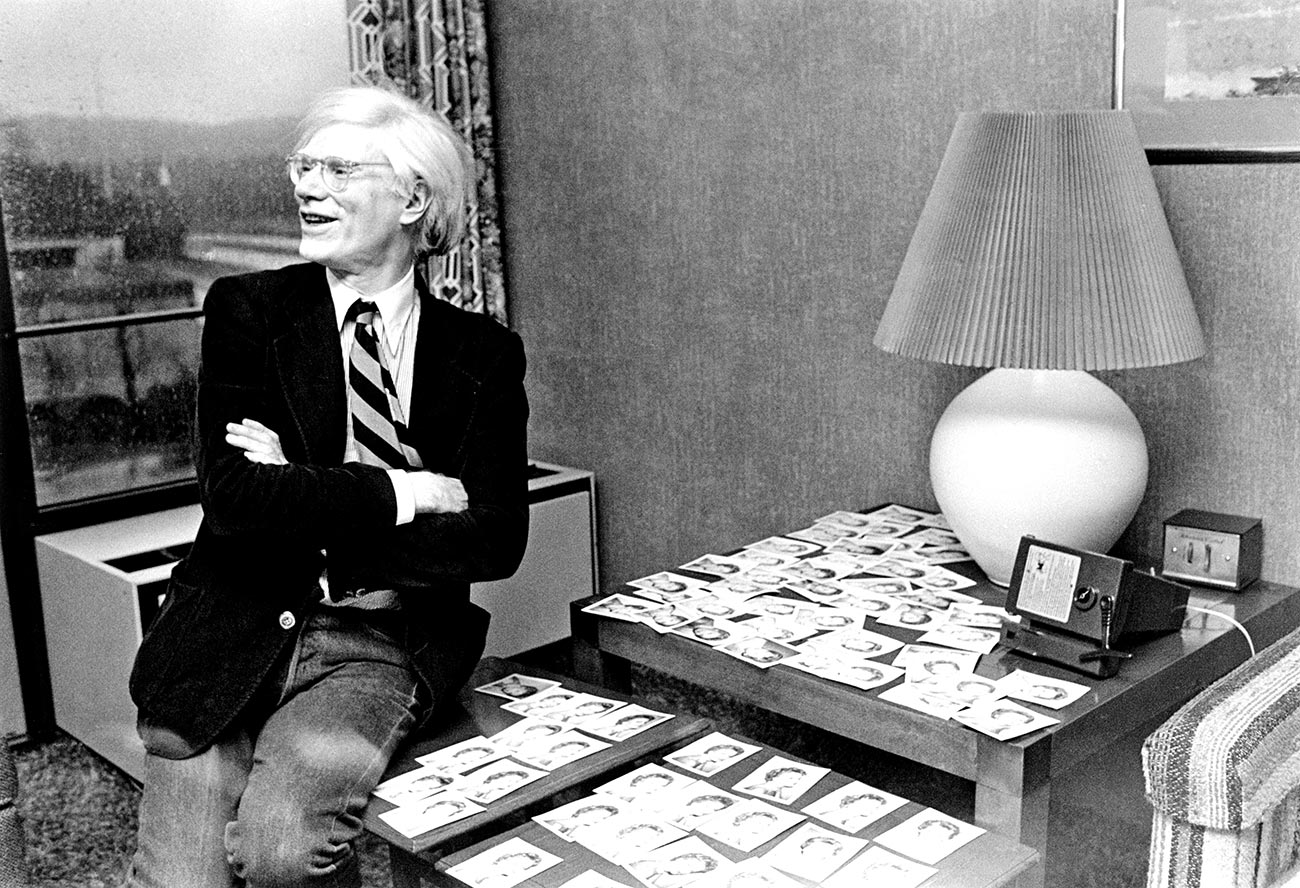
A few years later, Pop Art emerged as the new artistic vanguard following the Abstract Expressionist movement. Perhaps most often associated with artist Andy Warhol, Pop Art rejected the perceived narcissism associated with abstraction. Instead, Pop artists looked to everyday culture—including photographs in advertisements, newspapers and fashion magazines—as the inspiration for their art. In the wake of the Pop movement, photographer and photohistorian Arnold Gassan published A Chronology of Photography in 1972, which offers an interesting theory about why the 1960s became the moment when photography gained a foothold in the art community. Gassan cites three fundamental changes that spurred newfound interest in photography: significantly broader access to instruction; reevaluation of the quality of a photograph beyond mechanics; and the simultaneous resurrection of printmaking as a fine art medium.
Be the first the hear about new articles and videos in the Member Monthly email newsletter. Members receive year-round free admission, tickets to events, and more.
Until World War II, most photographers learned their craft as the quasi-apprentice of another photographer, typically supplementing their instruction with how-to manuals and independent experimentation. However, after the war, colleges and universities began offering photography courses as part of their studio arts curriculum. This coincided with a growing population of amateur photographers nationwide. The Kodak Instamatic 100 Camera, commercially available beginning in 1963, featured the first cartridge-loading film, making it easy to use even for beginners. With this proliferation of both amateur enthusiasts and newly college-trained photographers, the boundaries of photography were further explored.
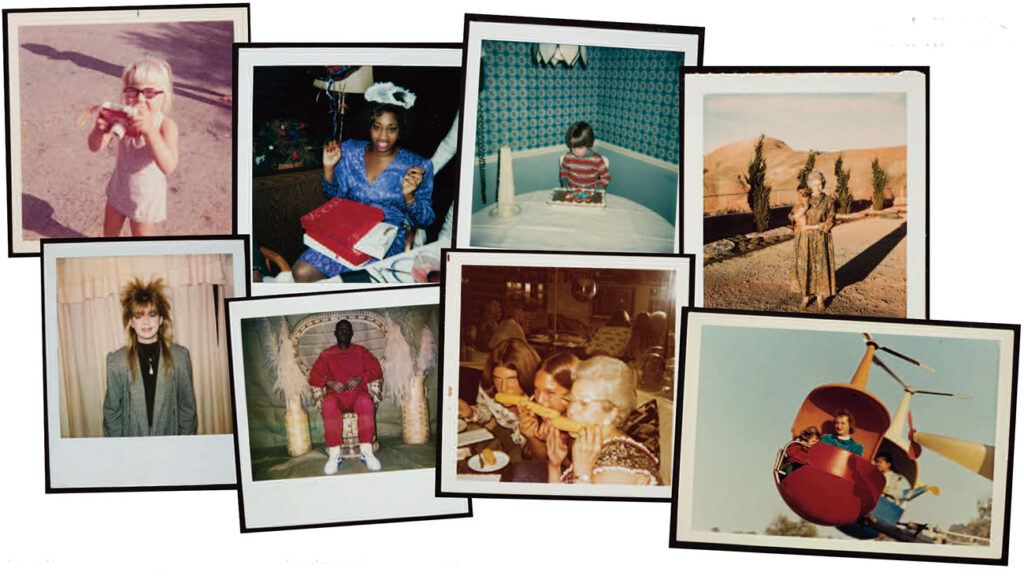
are part of a gift to the Museum by Mr. Peter J. Cohen (2018.46.1–2014.46.87).
Artists like Andy Warhol, Robert Heinecken, and Robert Rauschenberg recognized photography’s pervasiveness in popular culture—particularly in advertising, fashion magazines, and newspapers. Accordingly, their artwork incorporates photography, sometimes directly, but more often indirectly. For example, Warhol’s 1972 color screenprint Mao Tse-Tung was appropriated from a photograph of the ruler in Quotations from Chairman Mao Tse-Tung, more commonly known as the Little Red Book. Heinecken sourced his layered photographs and prints from photographs in magazines, and Rauschenberg often incorporated images and text he found in newspaper articles. The artists we more commonly associate with photography of the 1960s—like Diane Arbus and the early adopter of color, William Eggleston—continued to work at the same time as painters, printmakers, performers, and the like. Instead of seeing them as outliers, Arbus and Eggleston should be understood as a part of the mainstream 1960s survey, as their photos illustrate the way their art comments on everyday American life, much like their Pop counterparts.
A reliance on photography extended beyond the 1960s into the 1970s with the emergence of conceptual art. Conceptual artists focused on the idea or concept behind a work of art more than the actual object itself. As a result, more ephemeral art production appeared in the form of performances and written instructions for artworks. Despite the desire to escape objecthood, conceptual artists still relied heavily on photography as a form of documentation. Without photo documentation, for example, temporal art performances would leave no tangible trace today. Land artists, whose work could quickly disappear given various weather and tidal shifts, also relied on photography to secure evidence of their interventions into nature. Finally, a new painting movement called Photorealism emerged. Led by artists like Richard Estes, the Photorealists created hyper-real paintings that mimicked the detail achieved by the camera.
Unlike the cultural revolution of the 1960s, the photo revolution was a quiet affair, with the rise of photography seeping into a wide range of media until it emerged triumphant in the 1980s as a dominant force in contemporary art. However, there really is nothing quiet about the photo revolution; rather, it exuberantly reminds us of the foundational role photography played in the second half of 20th-century avant-garde art.
Taken and adapted from the 2019 fall/winter edition of the Worcester Art Museum’s access Member magazine.
Photo Revolution: Andy Warhol to Cindy Sherman, November 16, 2019–February 16, 2020
Stay connected! Sign up for the Worcester Art Museum’s email newsletter.