
Opening in November 2026, the Exhibition Spans Over Seven Hundred Years of Art from East Asia, with a New Commission by Taiwanese American Artist Mu Pan
Worcester, MA—March 25, 2026—This fall, the Worcester Art Museum (WAM) will present Beasts of Legend: Animals in East Asian Art, an exhibition exploring the importance of three real and mythical animals—tigers, monkeys, and dragons—in East Asian cultures throughout history and into the present day. Opening November 21, 2026, and on view through February 21, 2027, Beasts of Legend will demonstrate the enduring relevance of these iconic creatures through art, with more than two dozen works spanning seven centuries. The exhibition will feature works from the Museum’s permanent collection alongside significant loans, covering a wide variety of media that includes paintings, sculptures, puppets, textiles, and works on paper. Among the artworks on view will be a new painting by Taiwanese American artist Mu Pan, commissioned by the Worcester Art Museum for the exhibition.
“The tiger, monkey, and dragon hold pivotal roles in East Asian mythologies, shaped by the wide circulation of Buddhist, Confucian, and Taoist thought across the region as well as local traditions such as Japanese Shintoism and Korean Shamanism,” says Yagnaseni Datta, the Museum’s Sohail and Mona Masood Associate Curator of Asian and Islamic Art, who organized Beasts of Legend. “This exhibition is an opportunity for visitors to learn about these histories in a way that is easily approachable, through animals whose legacies and popularity permeate across cultures and continues into today.”
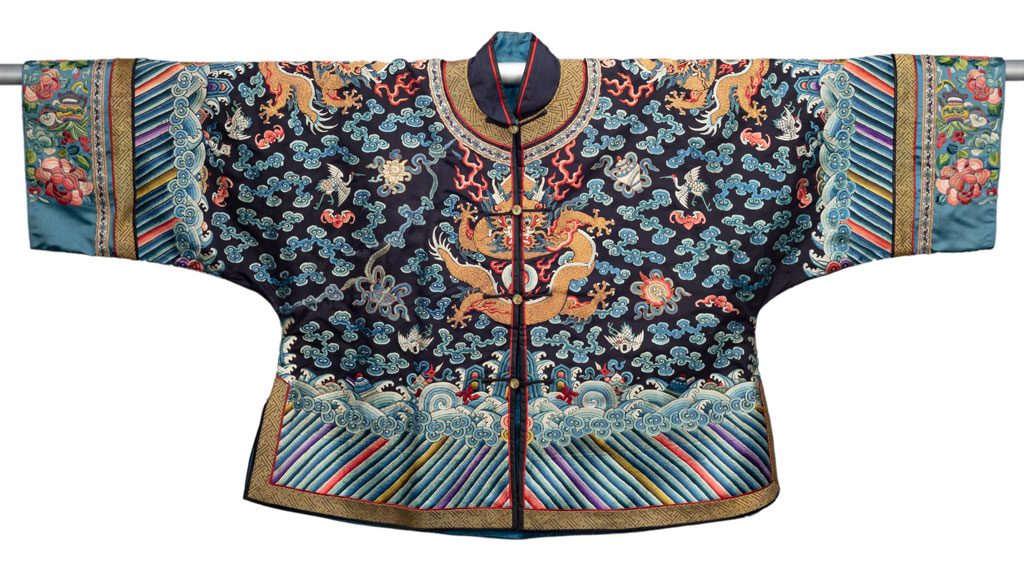
The exhibition will be organized into three sections, each focusing on the meaning and symbolism behind one “beast of legend.” In the first section, the dragon—associated with wisdom and sovereignty—will be represented through Chinese imperial robes, Japanese woodblock prints and screens, and Korean hanging scrolls, demonstrating the ubiquity of the dragon in East Asian visual culture. The robes, which are rarely on view due to their sensitivity to light, were originally worn in the Qing Dynasty’s imperial court. The dragon was an emblem of Qing authority, and details such as color and the number of claws were used to indicate roles and ranks within the government.
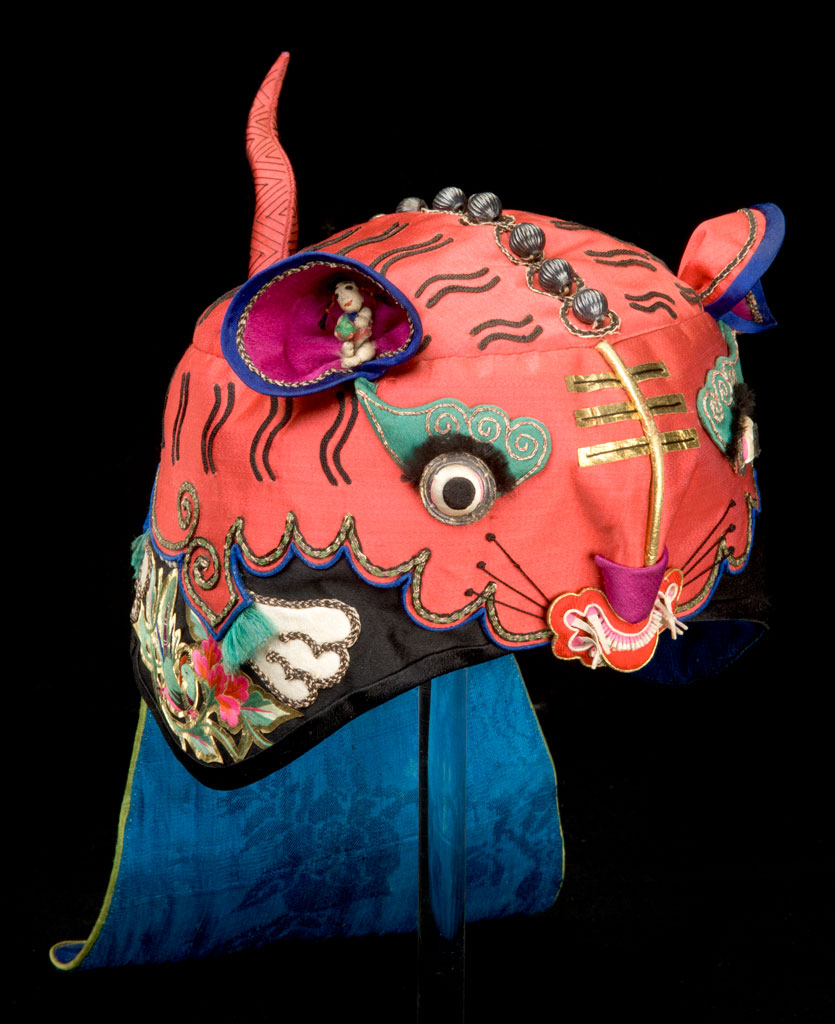
The second section will explore the tiger as the embodiment of courage and protection. The wide breadth of material will show the ways the tiger has been adapted to serve spiritual, political, and everyday functions across time and place. Three 19th–20th-century Chinese shadow puppets, on loan from the Asian Art Museum of San Francisco, will be displayed in frames that allow visitors to view both sides of their elaborate two-dimensional construction. An intricately decorated oxhorn box from Korea, on loan from the Cleveland Museum of Art, is painted with a tiger and dragon among other plants and animals, exemplifying the importance of these animals in the decorative arts. A lavishly decorated hat in the shape of a tiger—complete with eyes, ears, and a tail—from China’s Qing Dynasty shows the protective symbolism of the tiger in an auspicious red color.
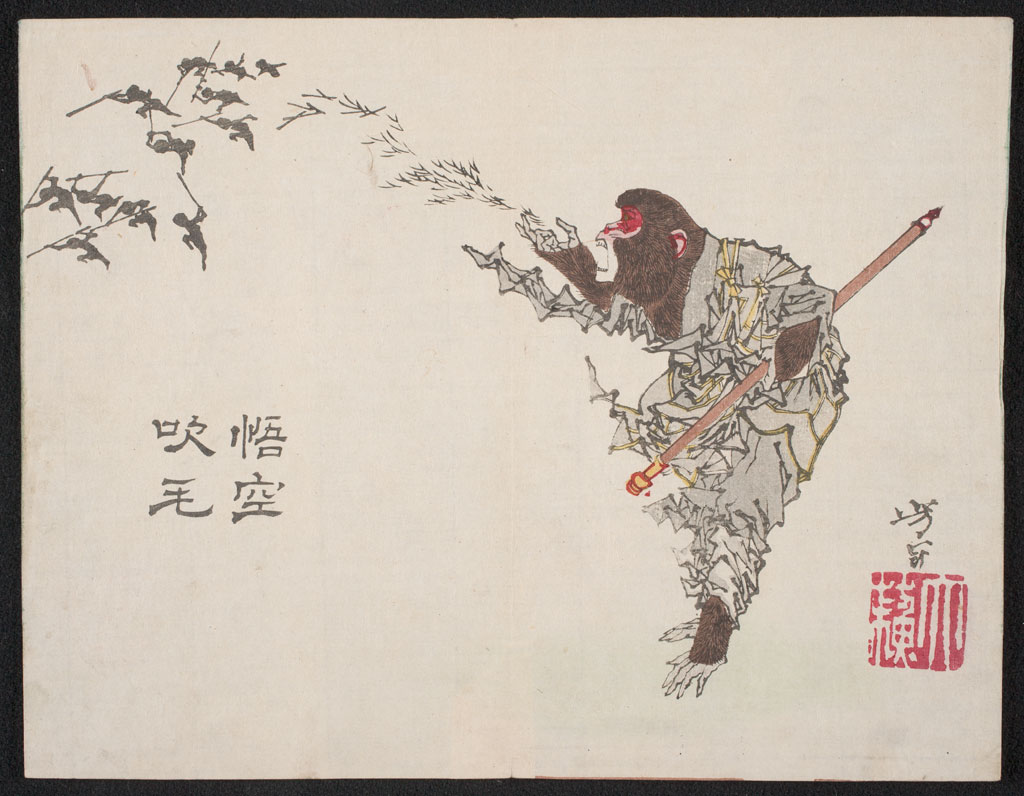
The third section showcases the monkey’s dual role as trickster and hero in art through Sun Wukong, the Monkey King. Introduced as a supernatural helper in the 16th-century Chinese novel Journey to the West, Sun Wukong has become one of the most enduring and beloved heroes in China, Japan (known as Son Goku), and Korea (known as Son Oh-gong). His character has been continually reimagined over the centuries—in woodblock prints, television dramas, films, and video games—reflecting his cultural resonance and broad appeal.
Mu Pan, a Taiwanese American artist based in Brooklyn, has been commissioned by the Worcester Art Museum to create a large-scale painting inspired by the theme of the monkey. The painting will incorporate animal imagery from multiple literary traditions and works of martial arts fiction, reflecting on themes of conflict and collaboration. Mu Pan’s work has been shown throughout the United States and Europe, including WAM’s 2015 Samurai! exhibition. His paintings often depict dramatic battles between half-animal, half-human creatures, and his past commissions include a painting featured prominently in Ari Aster’s acclaimed 2019 horror film Midsommar.
“Beasts of Legend will give visitors a window into the remarkable breadth and depth of the Worcester Art Museum’s collection of Asian art and the connections we are able to make across space and time with these extraordinary objects,” says Claire Whitner, the Museum’s Director of Curatorial Affairs. “These animals offer an accessible entry point while opening the door to deeper exploration. As in our ever-evolving permanent collection galleries, visitors with ranging interests and knowledge can expect to come away with new perspectives.”
On February 12, 2027, the Museum will partner with the College of the Holy Cross to present a symposium exploring the themes and histories behind the exhibition. “We are proud to be working closely with the College of the Holy Cross and leading scholars on this landmark symposium,” says Matthias Waschek, the Museum’s Jean and Myles McDonough Director. “Our role in connecting with Worcester’s thriving college and university community—along with our longstanding relationship with the College of the Holy Cross—makes us uniquely positioned to co-host this event for students, scholars, and museumgoers alike.”
Additional related programs and events will be announced in the coming months on the Museum’s website. An accompanying exhibition catalog with contributions from experts in the field will be available for purchase in the Museum’s shop.
Early research for this exhibition was generously supported by the E. Rhodes and Leona B. Carpenter Foundation.
About the Worcester Art Museum
The Worcester Art Museum creates transformative programs and exhibitions, drawing on its exceptional collection of art. Dating from 3000 BCE to the present, these works provide the foundation for a focus on audience engagement, connecting visitors of all ages and abilities with inspiring art and demonstrating its enduring relevance to daily life. Creative initiatives—including pioneering collaborative programs with local schools, fresh approaches to exhibition design and in-gallery teaching, and a long history of studio class instruction—offer opportunities for diverse audiences to experience art and learn both from and with artists.
The Worcester Art Museum, located at 55 Salisbury Street in Worcester, MA, is open Wednesday through Sunday from 10 am to 4 pm. For information on admission and discounts, visit https://www.worcesterart.org/visit. Museum parking is free.
For more information, please contact:
Madeline Feller
Worcester Art Museum
MadelineFeller@worcesterart.org
508-793-4373
Sascha Freudenheim
PAVE Communications & Consulting
sascha@paveconsult.com
917-544-6057
Images:
Protective Red Tiger Hat with Tail and a Hat Flap Decorated with Birds, Flowers and Auspicious Designs, about 1875, Qing Dynasty (1644-1911), satin, silk thread, gold foil, metal beads and paper, Alexander H. Bullock Fund, 2012.70
Woman’s Jacket, Qing Dynasty, late 19th century, embroidered silk, Gift of Mrs. Marie Lepore, 1998.81
Tsukioka Yoshitoshi 月岡 芳年, Songoku Creating an Army from His Fur, 1860–1892, Alexander H. Bullock Fund, 2002.162