
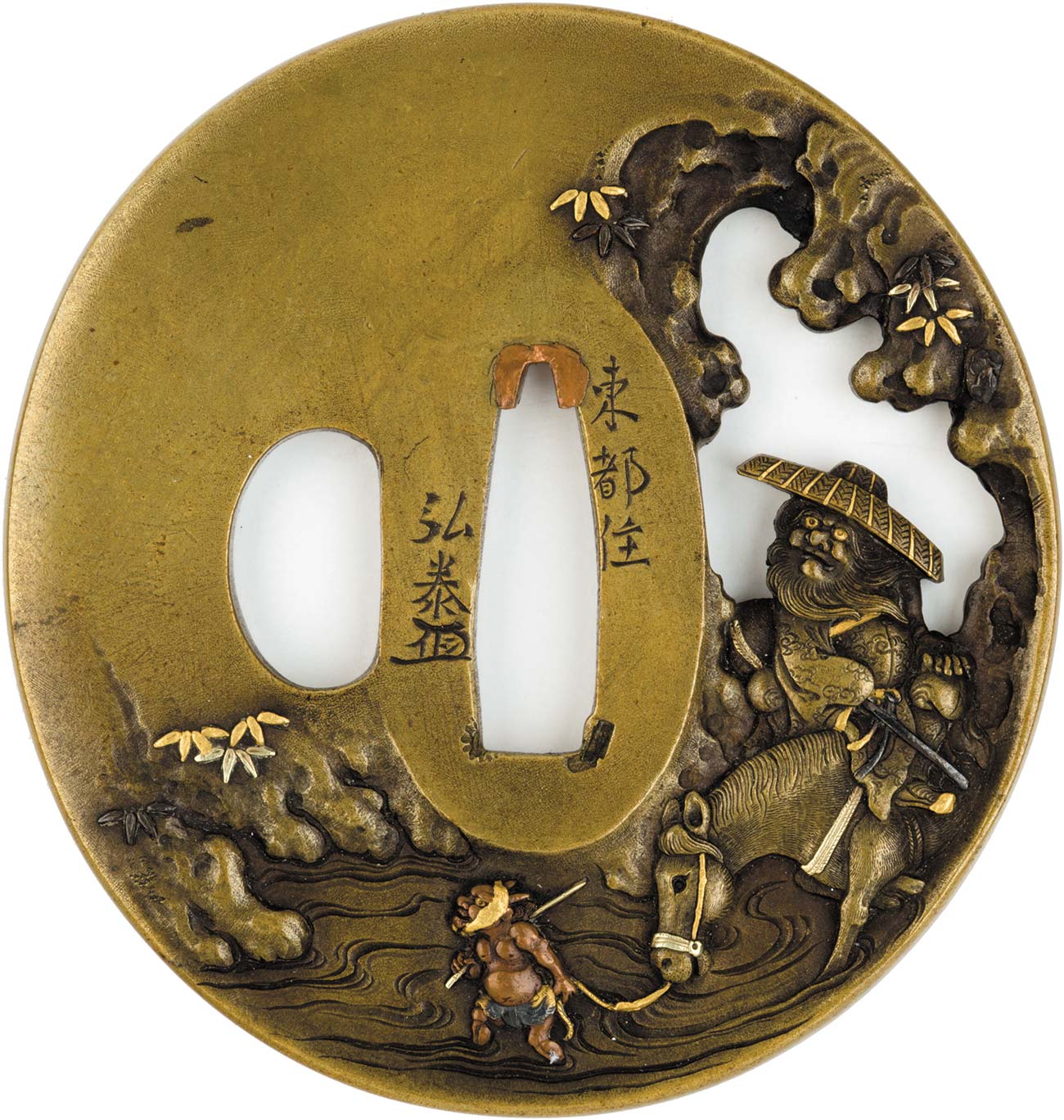
The katana, the iconic sword of Japanese tradition, is often described as the soul of the samurai, and certainly it embodies the lethal ferocity we associate with Japan’s legendary warriors. But if we are looking for a window into the samurai soul, it may be the sword fittings that have more to tell us. The katana and its scabbard were fitted with metal components that served various practical purposes: the koiguchi to protect the mouth of the scabbard; the kojiri to protect its tip; the menuki that nestled inside the swordsman’s palms. But perhaps most important was the tsuba, the iron handguard at the base of the blade.
The tsuba and other fittings had to be fully functional in the grueling environment of combat, but they also served as part of the owner’s strategy of self-identification to the world, reflecting his taste, sophistication, and public persona. They were removable to facilitate cleaning of the blade: this also allowed the samurai to trade in a new set to suit a particular occasion, or to keep up with changing tastes and fashions.
Early tsubas tended to be simpler in design, often relying on openwork adornment akin to the middle example above. During the peace of the Edo period, the tsuba as art form became increasingly complex and refined, evoking naturalistic, mythological, and poetic themes in moods that ranged from serene to whimsical. Shoki, the demon queller, shown here crossing a stream with the aid of a subservient imp, derives from the legendary Chinese hero Zhong Kui. The deer bellowing at the moon evokes autumnal themes found in many haiku and would have been especially suited for a samurai’s fall wardrobe—it might also be a sardonic comment on his romantic status, as the deer who bellows under the autumn moon is the one who has not yet found a mate.
Taken and adapted from the 2015 winter edition of the Worcester Art Museum’s access Member magazine.
Stay connected! Sign up for the Worcester Art Museum’s email newsletter.